Maurice
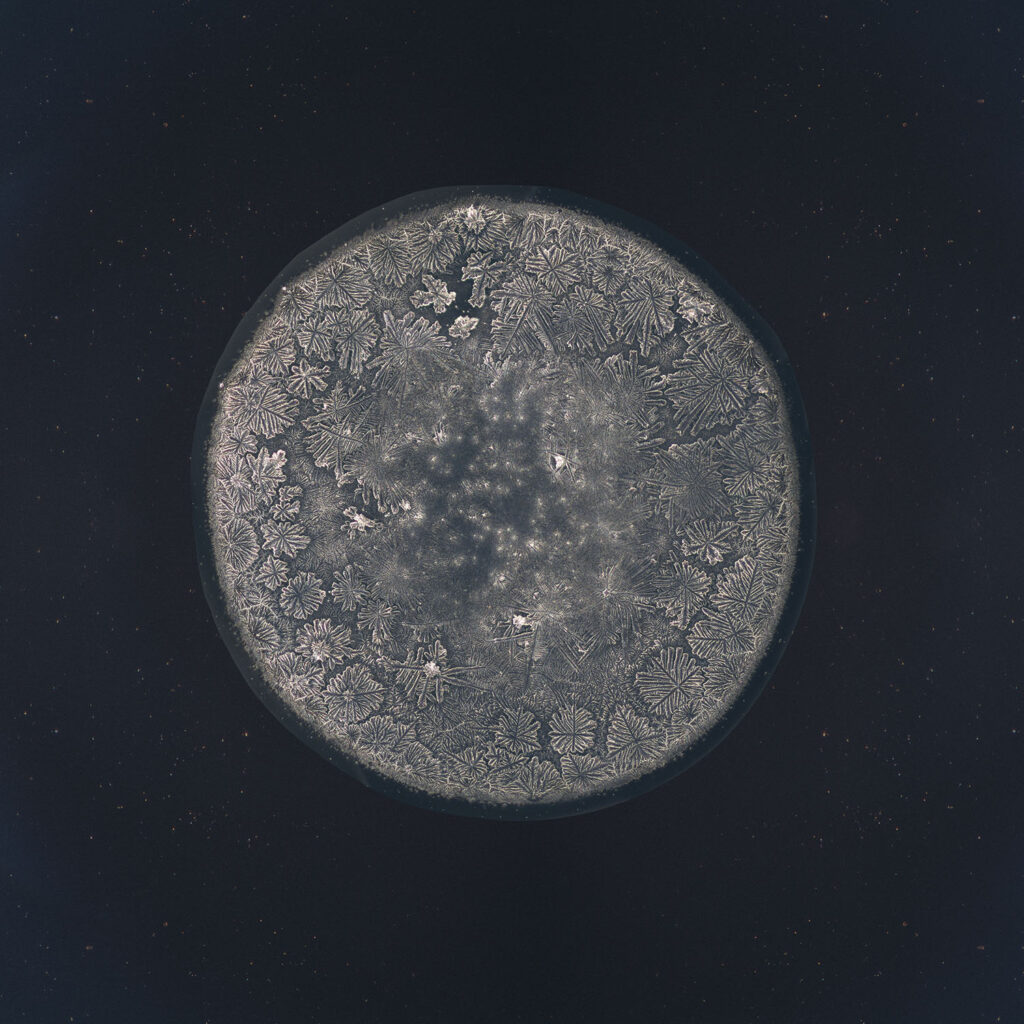
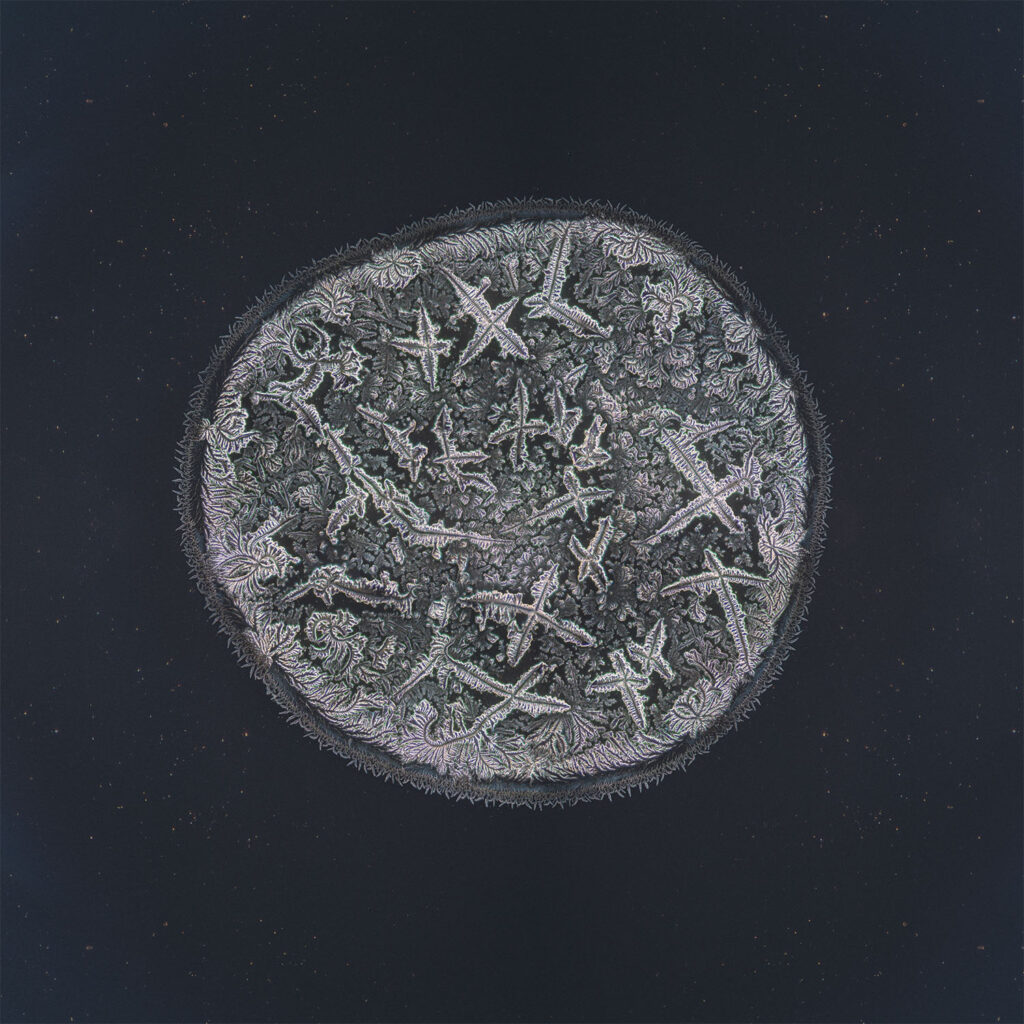
An emotional tear from the early Imaginarium archive.
Crystallized human tears photographed under the microscope, revealing unique microscopic landscapes and the personal stories behind them.
Every tear has a hidden story. Imaginarium of Tears is an ongoing photography project that visualizes crystallized human tears under the microscope, turning something normally invisible into a unique work of art connected to a real person and a real moment.
The resulting micrographs function as story starters. The image draws you in, but the story behind the tear gives it meaning. Tears can be connected to sadness, frustration, loss, goodbye, happiness, laughter and many other experiences. By sharing both the image and the story, the project creates space to talk about the moments and challenges in life that caused those tears — and, through those stories, to connect with one another.
The crystalline pattern itself does not tell us what someone was feeling. Tear composition differs between people and tear types, while preparation, temperature, humidity and evaporation also influence how a tear crystallizes. Imaginarium of Tears therefore brings two things together: the hidden visual landscape of the tear and the personal story that belongs to it.
An emotional tear from the early Imaginarium archive.
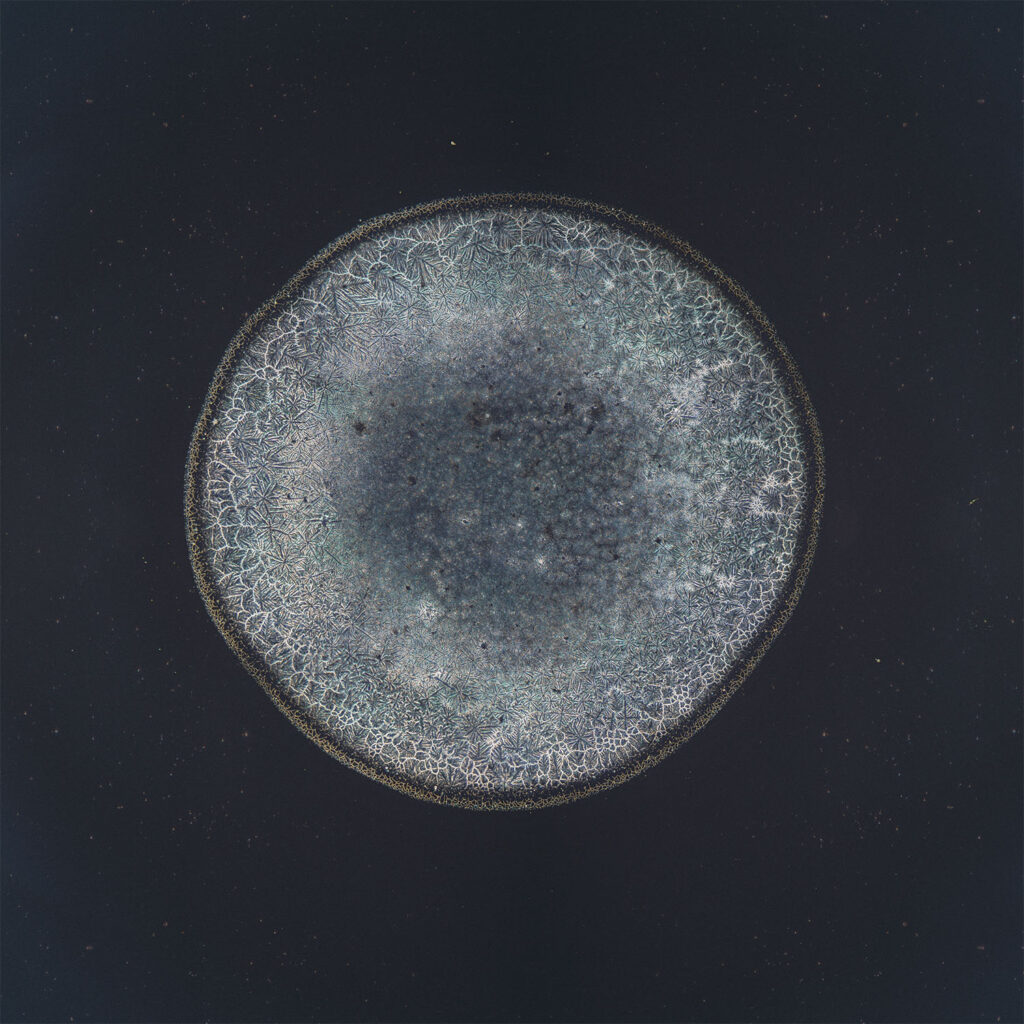
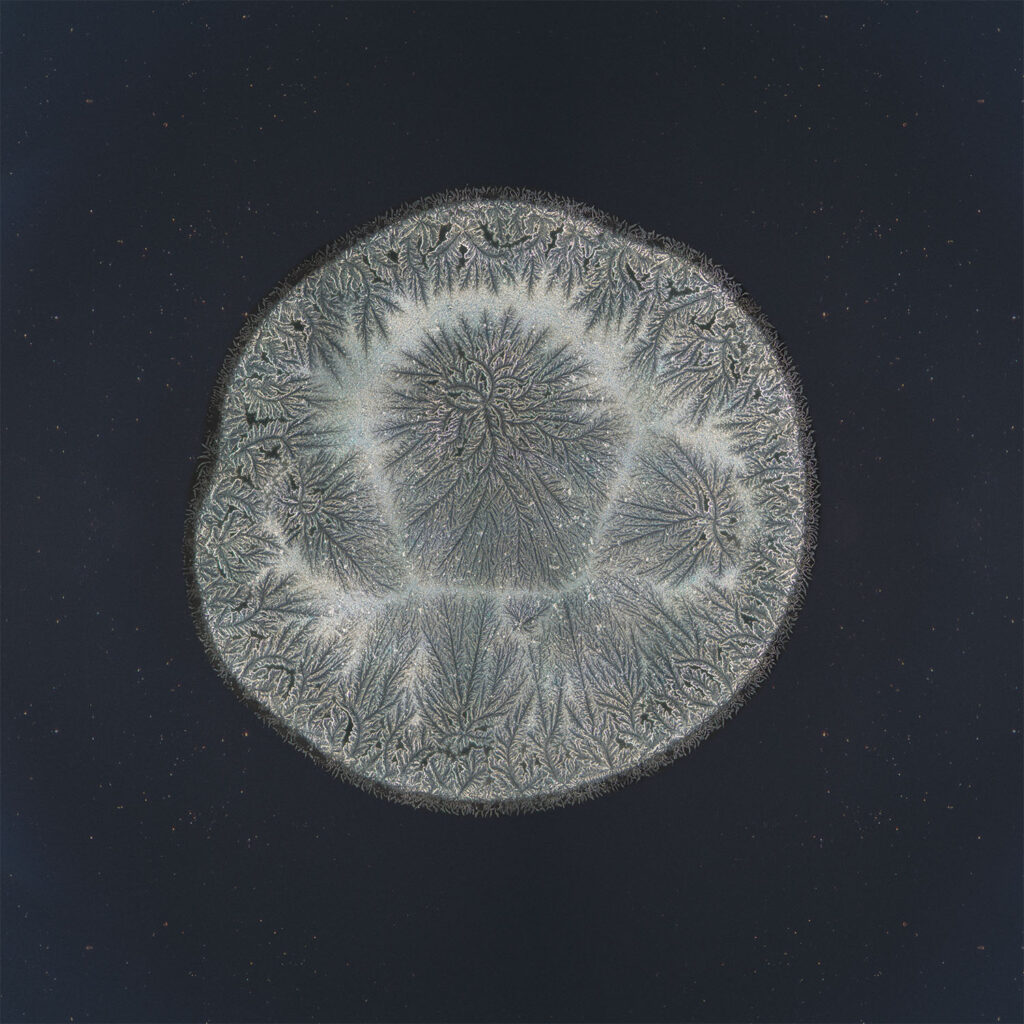
A basal tear produced while looking into a large ventilator.
A basal tear produced by wind from a large ventilator.
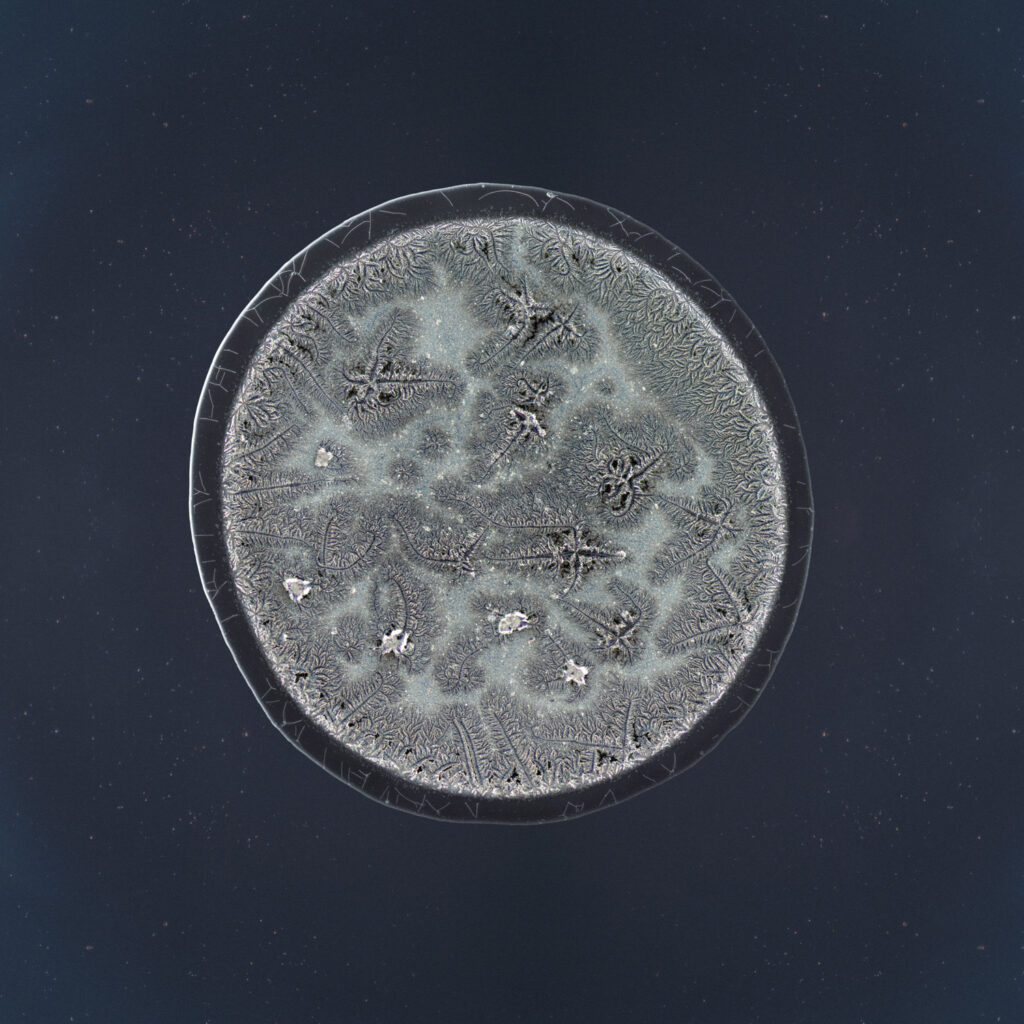
A reflex tear produced while cutting onions and eating red pepper.
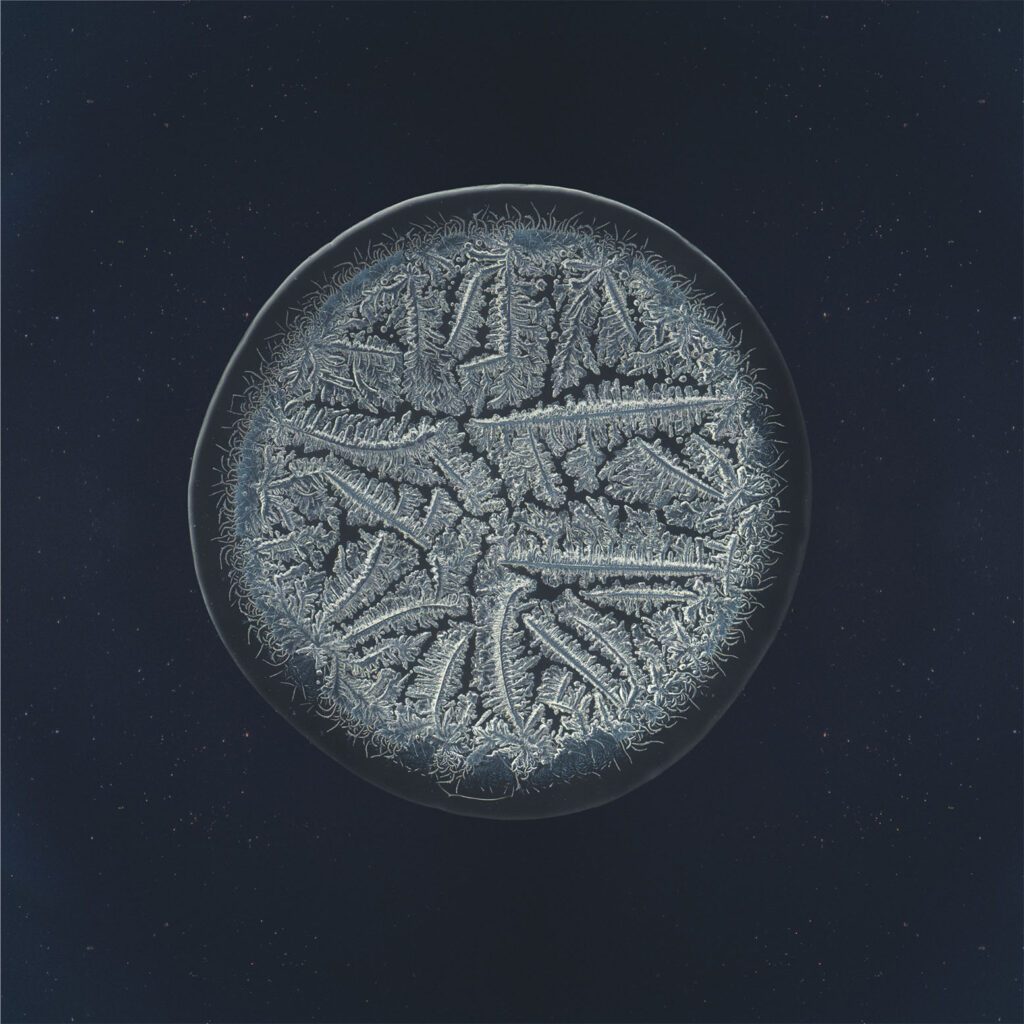
A reflex tear induced with menthol oil near the eyelid.
A basal tear produced while looking into a large ventilator.
Some tears and personal stories remain private at the participant’s request. The public archive shows only the work that can be shared.
An ongoing photography tear collection, with personal stories at its heart.
Collection, crystallization, dark-field microscopy, automated scanning and image assembly are part of the artwork.
A complete dried tear is larger than a single microscope field of view. To photograph it consistently, a 30+ year-old Nikon microscope was adapted with a custom CNC-controlled scanning stage. The system moves across the slide, captures hundreds of overlapping frames and makes it possible to assemble the complete tear into one ultra-detailed image.
Read the detailed microscope build and scanning process →A tear is captured during a real moment and safely collected for the project.
The sample dries on a microscope slide and creates a temporary crystalline structure.
A custom CNC-controlled microscope stage records hundreds of overlapping fields of view.
The frames are stitched into one complete, ultra-detailed micrograph.
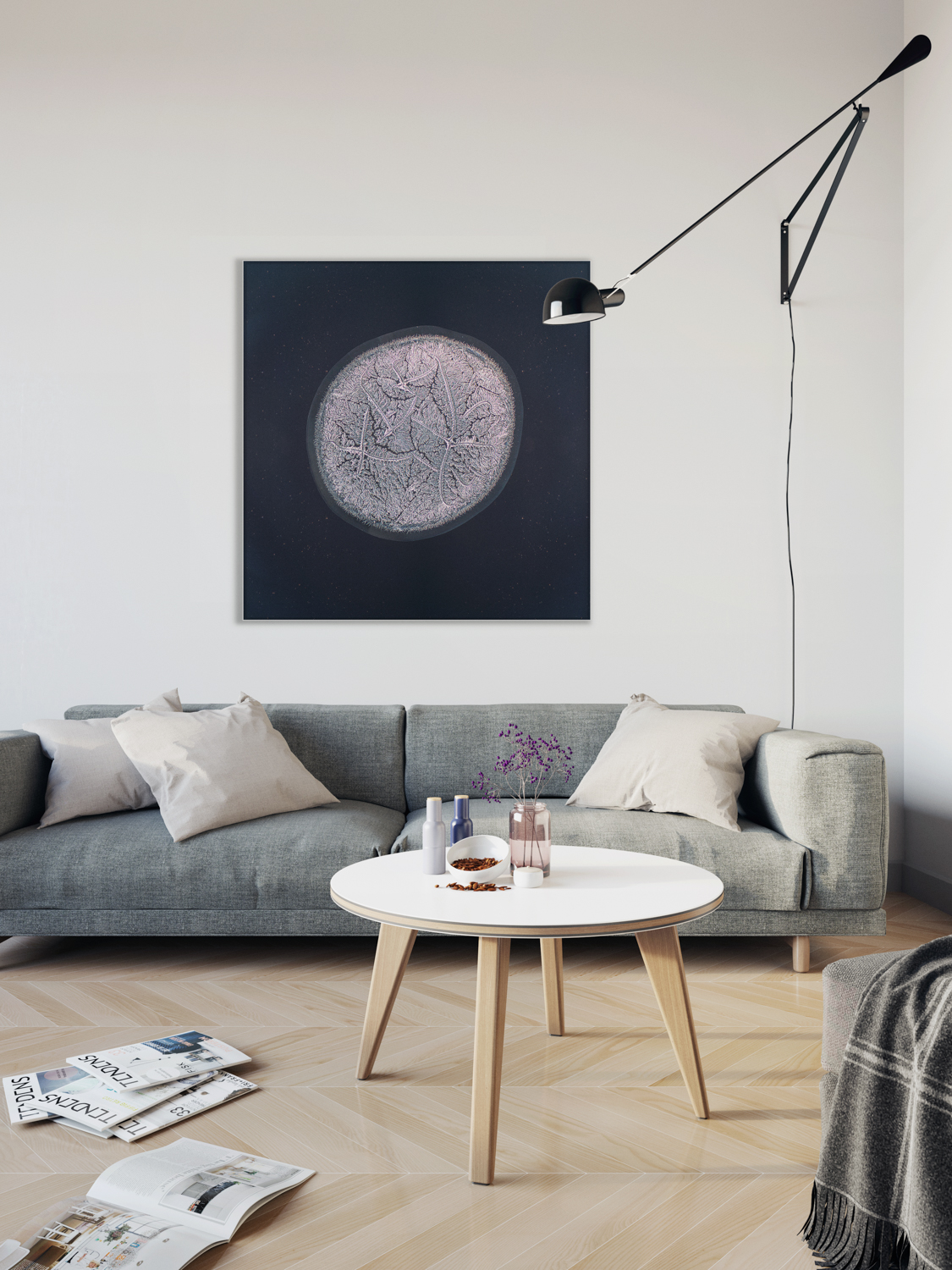
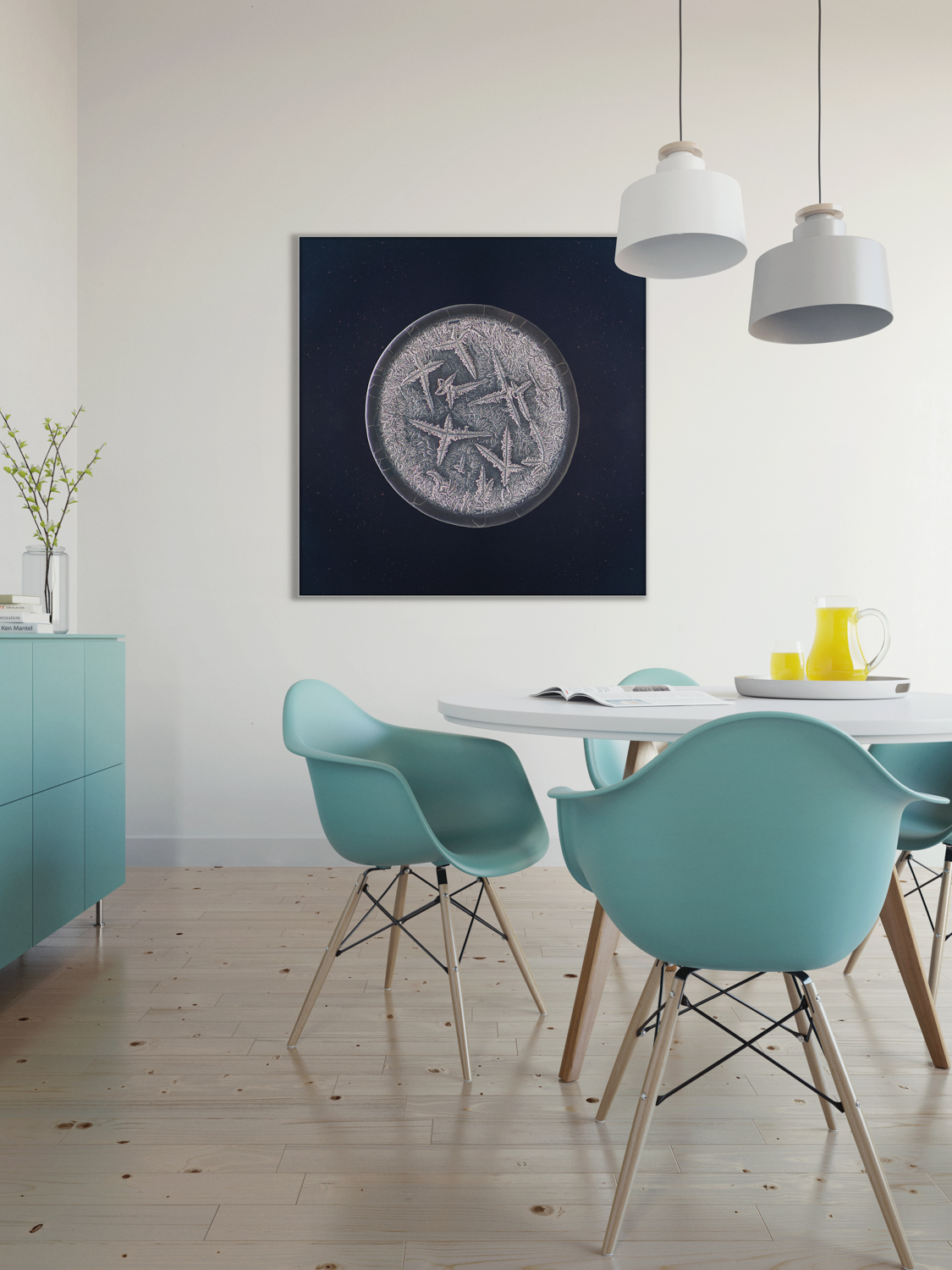
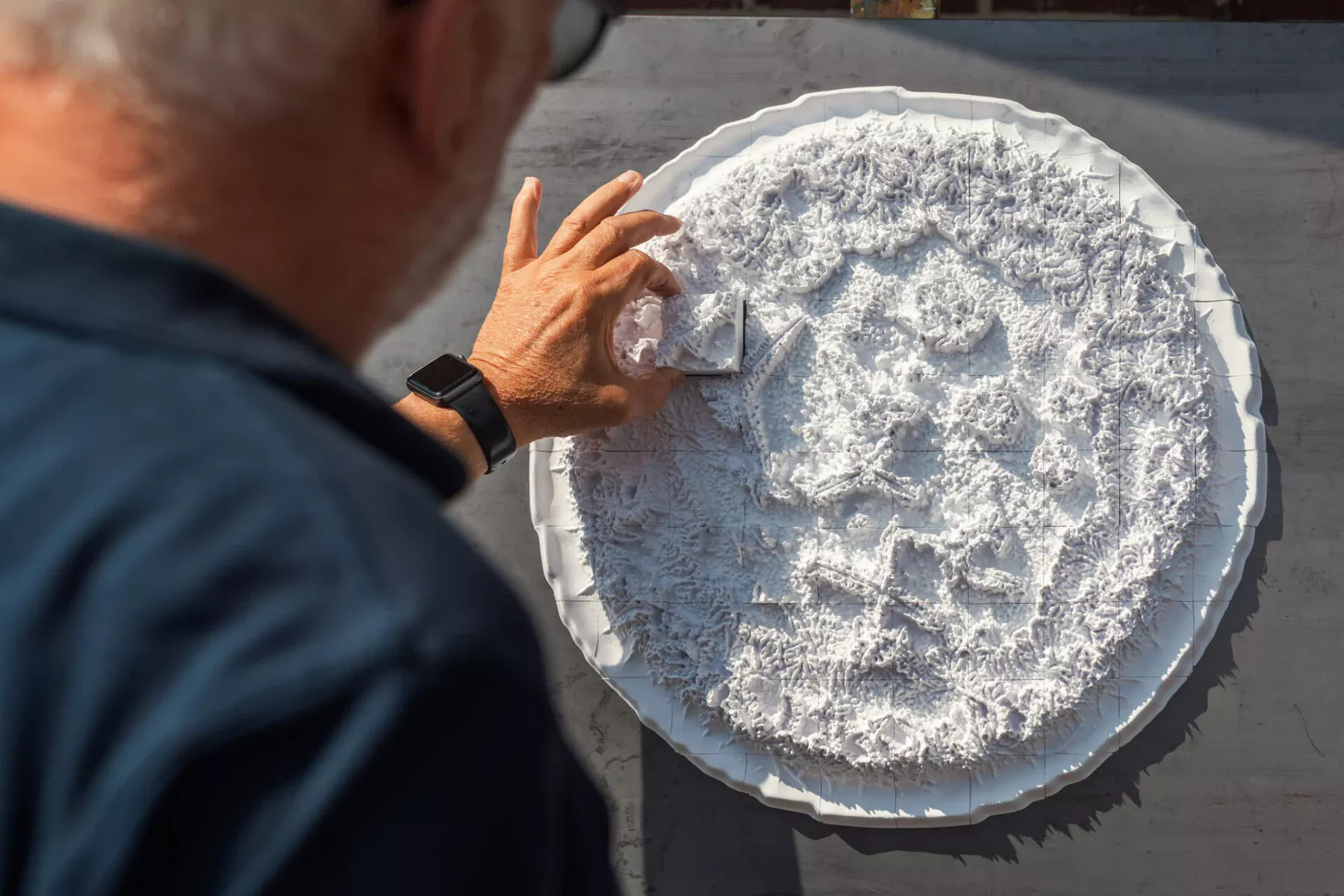
The final image can remain digital, become a photographic print or be produced as a finished wall artwork. At larger scale, the hidden microscopic landscape changes into something physical you can live with.
Each artwork begins with the complete microscopic image of a real crystallized tear. Hundreds of microscope photographs are assembled into one highly detailed image, preserving both the overall form of the dried tear and the structures that only become visible under magnification.
The resulting image can be experienced at very different scales. As a digital image it allows close inspection of the microscopic landscape; as a photographic print the tear becomes a physical object while retaining the detail of the original microscopy.
At larger dimensions, the relationship with the image changes again. A structure that originally existed within only a few millimetres can extend across a substantial part of a wall, allowing the viewer to move between seeing the complete tear and discovering individual crystalline formations.
The scale, material and presentation can therefore be adapted to the space in which the work will live — from a personal photographic print to a large finished artwork for an interior, exhibition or public setting.


A tear can become something you keep — or the project can become part of your own space.
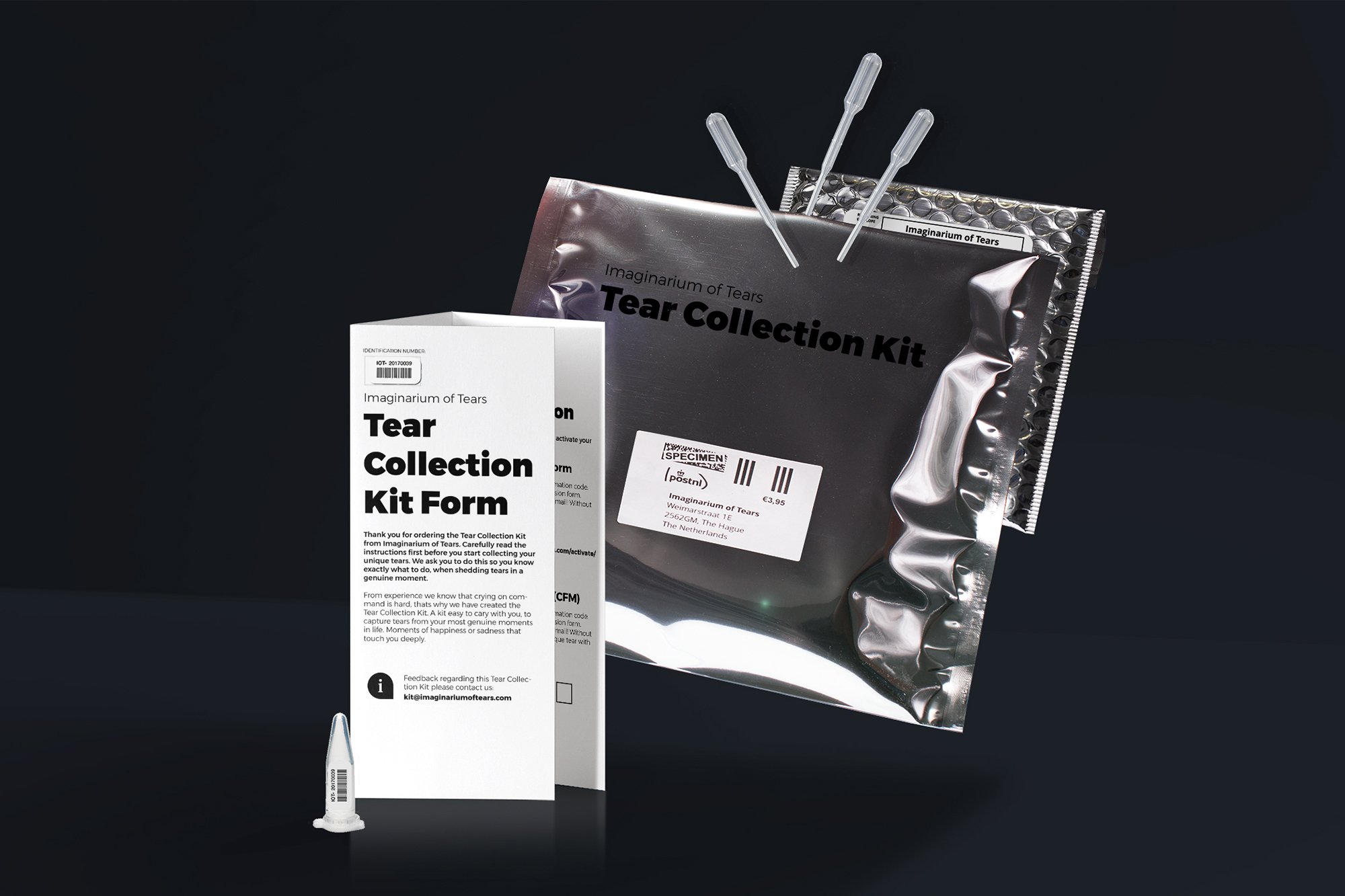
If a meaningful tear appears in your life, the Tear Collection Kit allows you to preserve it and send it back for microscopy. Your tear is crystallized, photographed and transformed into a personal image or finished artwork connected to that moment.
If you would rather collect an existing work, explore artworks and the postcard collection from the Imaginarium of Tears archive — each originating from a real tear and the story behind it.

Collect a tear during a meaningful moment and have its crystallized microscopic landscape photographed as your personal artwork.

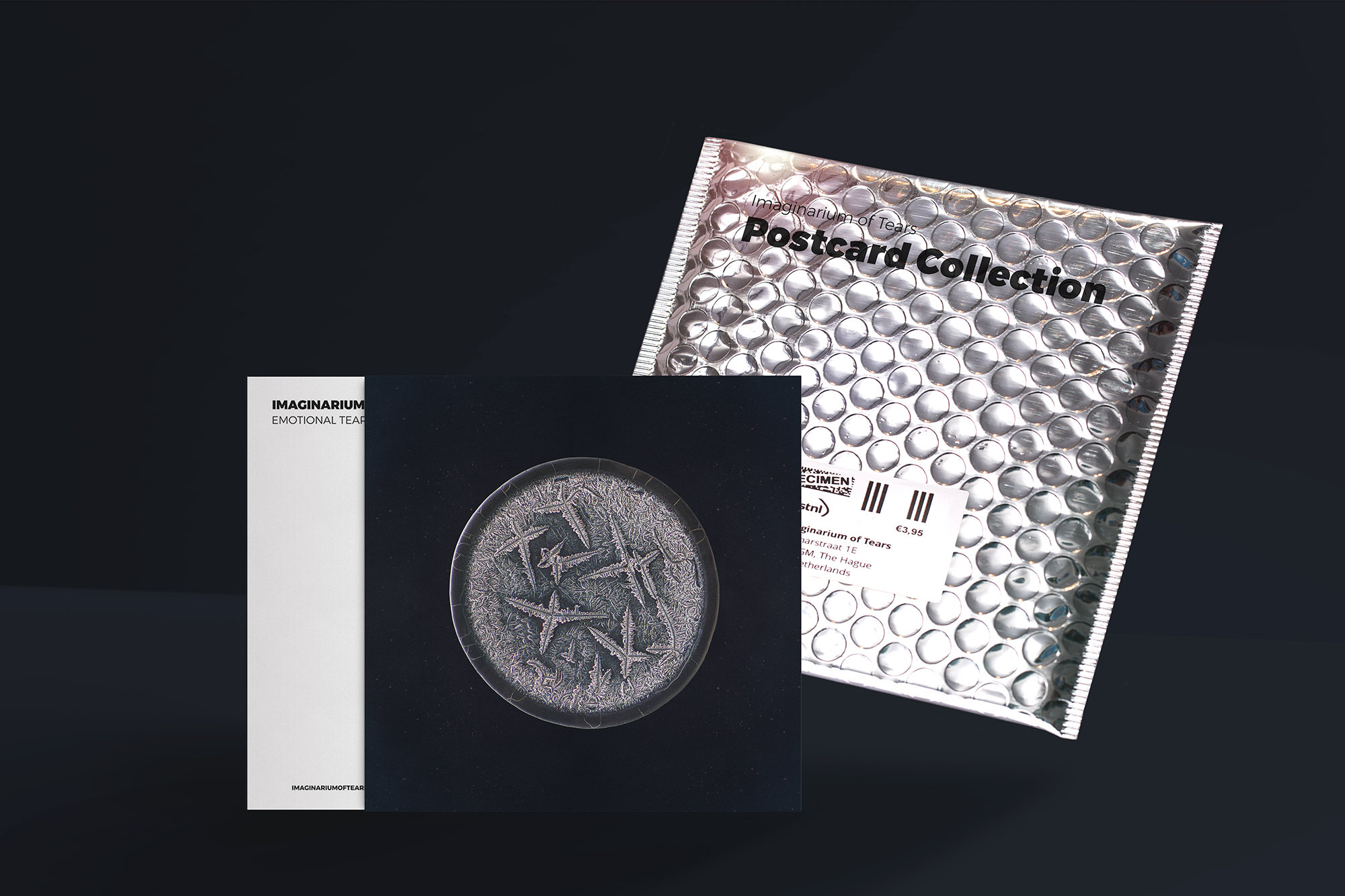
Ten real human tears from ten different people, bringing emotional, reflex and basal tears together in one physical collection.

I am developing new ways to translate the microscopic image of a tear into three-dimensional forms — moving from photography into objects, multiples and spatial experiences.
A microscopic tear connected to a personal and emotional moment can be converted into a height map and reconstructed as a digital 3D terrain. That terrain can then be scaled, segmented and fabricated, preserving the visual structure of the original tear while giving it physical depth.
One current study divides a single tear landscape into 88 individual fragments. Each object contains a different part of the same source image and story. The fragments can move into different everyday environments, allowing one tear from one emotional moment to be physically shared across many places.
This direction grows from earlier experiments in which visitors could move through a tear as a VR landscape, followed by a ten-metre physical installation that turned the same principle into a space people could enter.
Since 2015, Imaginarium of Tears has appeared in museums, exhibitions, festivals, science programmes, public installations and live tear-collection experiences around the world.
The project changes with each setting — sometimes presented as finished photographic work, sometimes as a live microscope experience, a collaboration, broadcast or part of a larger programme exploring emotion, science and the human body.
Six enlarged crystallized tear photographs presented together with the personal stories behind them.
Group exhibition exploring human and non-human crying, including a microscopic tear photograph from Imaginarium of Tears and the participatory Tear Saline.
Microscopic tear imagery contributed to a permanent memorial artwork by Margit Lukács and Persijn Broersen.
Tear photography by Maurice Mikkers and Rose-Lynn Fisher presented in an exhibition connecting tears, crystallization and salt.
Imaginarium of Tears shown as part of KIKK in Town, an international programme connecting art, science and technology.
Exhibition with Tear Collection Kits and a live microscopy moment linked to the university’s programme on the science of crying.
Public programme with tear researcher Ad Vingerhoets and Maurice Mikkers exploring why humans cry and the microscopic landscapes left by tears.
Microscopic tears from acid-attack survivors transformed into an immersive VR landscape and physical installation for the launch of ASTi’s report.
Christian Hook visited Maurice Mikkers to investigate the hidden structures of human tears; the research informed works in Painting the Invisible and its Sky Arts documentary.
Imaginarium of Tears included in MOD.’s UP CLOSE / ON US online exhibition examining how the external world shapes perception, cognition and emotion.
Since the beginning of Imaginarium of Tears, I have documented experiments, technical development, exhibitions and ideas behind the project through Micrograph Stories on Medium.
The crystallized images function as story starters rather than scientific readings of emotion.
An exploratory branch examining the spatial structure of emotional, reflex and basal tear micrographs.
The Tear Collection Kit grew from the practical challenge of capturing and storing genuine emotional tears away from the microscope.
Ten unique tears and stories brought together as a physical postcard collection.
The detailed build story behind the custom CNC-controlled microscope scanning stage used to capture complete high-resolution micrographs.
The project started in 2015 and developed into experiments, exhibitions, press attention and a growing archive of tears and stories.
Selected publications, broadcasters and platforms that have featured Imaginarium of Tears and the work around it.