The process
stays visible.
Collection, crystallization, dark-field microscopy, automated scanning and image assembly are part of the artwork.
A complete dried tear is larger than a single microscope field of view. To photograph it consistently, a 30+ year-old Nikon microscope was adapted with a custom CNC-controlled scanning stage. The system moves across the slide, captures hundreds of overlapping frames and makes it possible to assemble the complete tear into one ultra-detailed image.
Read the detailed microscope build and scanning process →Collect
A tear is captured during a real moment and safely collected for the project.
Crystallize
The sample dries on a microscope slide and creates a temporary crystalline structure.
Scan
A custom CNC-controlled microscope stage records hundreds of overlapping fields of view.
Assemble
The frames are stitched into one complete, ultra-detailed micrograph.
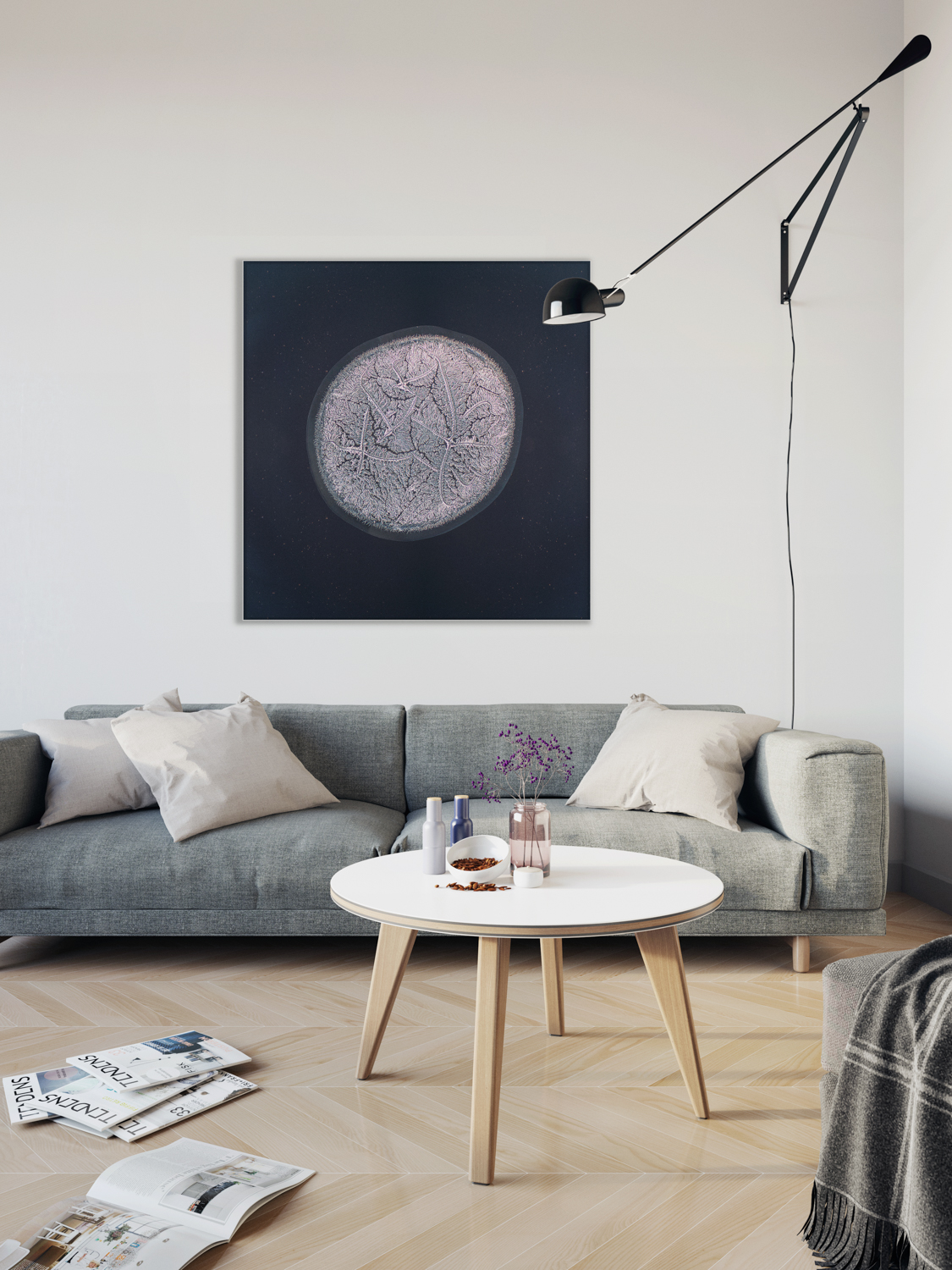
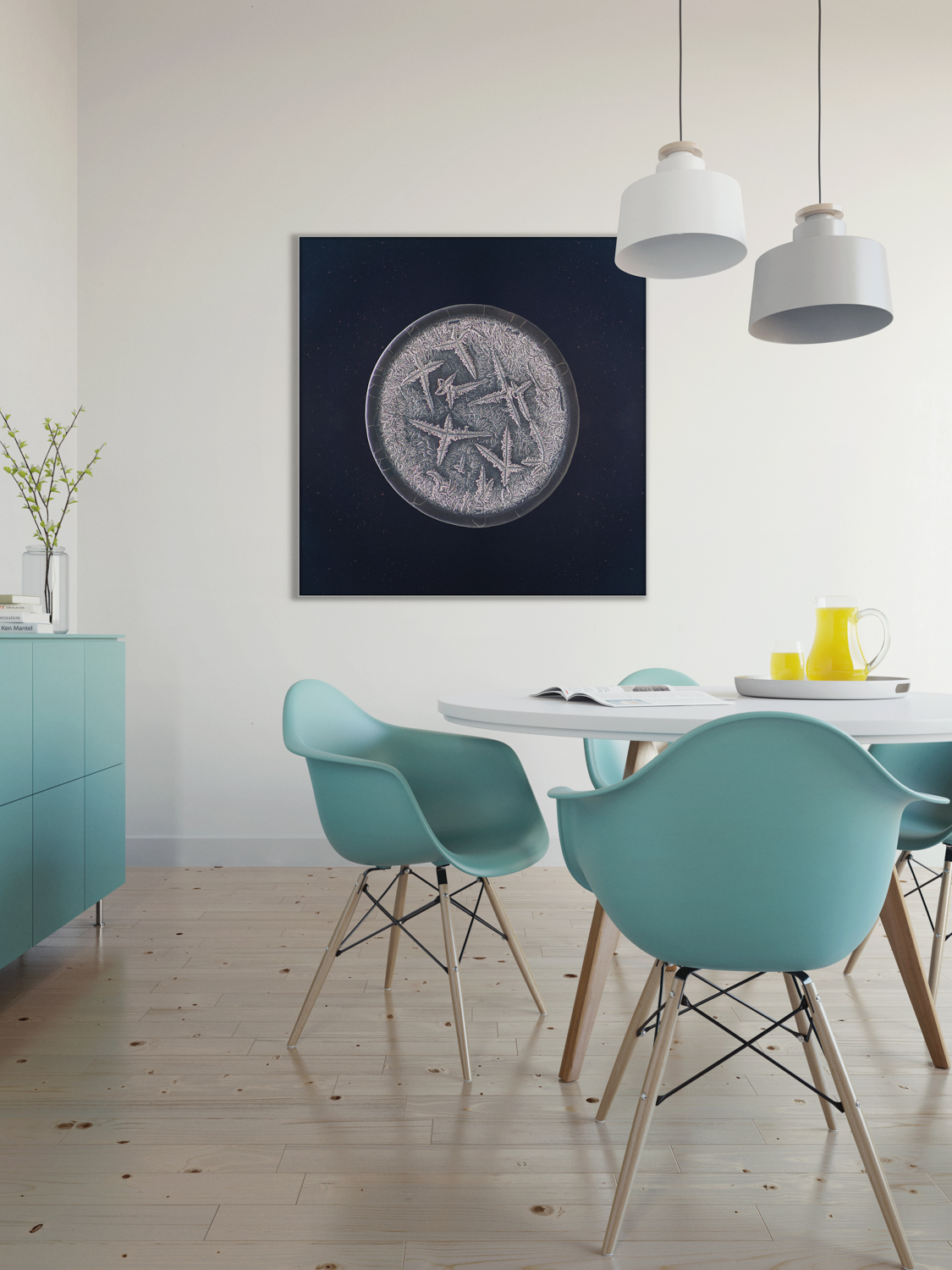
From a millimetre-scale tear to a room-sized presence.
The final image can remain digital, become a photographic print or be produced as a finished wall artwork. At larger scale, the hidden microscopic landscape changes into something physical you can live with.
Each artwork begins with the complete microscopic image of a real crystallized tear. Hundreds of microscope photographs are assembled into one highly detailed image, preserving both the overall form of the dried tear and the structures that only become visible under magnification.
The resulting image can be experienced at very different scales. As a digital image it allows close inspection of the microscopic landscape; as a photographic print the tear becomes a physical object while retaining the detail of the original microscopy.
At larger dimensions, the relationship with the image changes again. A structure that originally existed within only a few millimetres can extend across a substantial part of a wall, allowing the viewer to move between seeing the complete tear and discovering individual crystalline formations.
The scale, material and presentation can therefore be adapted to the space in which the work will live — from a personal photographic print to a large finished artwork for an interior, exhibition or public setting.