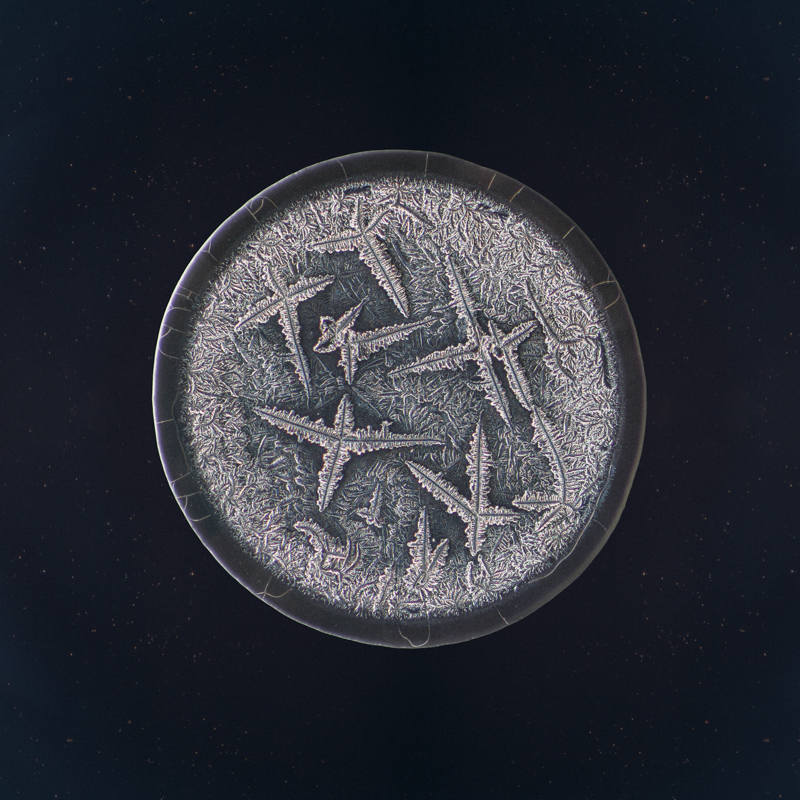
A personal artwork for remembrance, made from a real tear.
Grief has no timetable, and there is no right moment to collect a tear. If one appears naturally and you want to preserve its connection to someone you miss, it can become a private microscopic artwork with its story kept alongside it.
A tear artwork is not meant to replace photographs, letters, flowers, rituals or the other ways people remember someone. It can simply become another intimate trace of a person and a moment that matters to you.
There is no expectation that a tear should be collected at a funeral or any particular time. It may happen before a farewell, during a quiet memory much later, or not at all. If you choose to make an artwork, it can remain entirely private.
There is no right time or way to remember someone.
A farewell or funeral
If a tear appears naturally around a farewell or funeral, it can be collected if that feels appropriate. There is no reason to interrupt the ceremony or make collection part of the occasion; another moment may feel more natural.
A celebration of life
If it feels right, a tear may become connected to a story, reading, photograph, piece of music or memory shared during the gathering.
A private remembrance
Many people may prefer a quieter moment later. Grief can return unexpectedly, and a tear collected then can carry just as much personal meaning.
A memorial or anniversary
An anniversary or later act of remembrance can become the context for the artwork. Nothing needs to be decided at the original farewell.
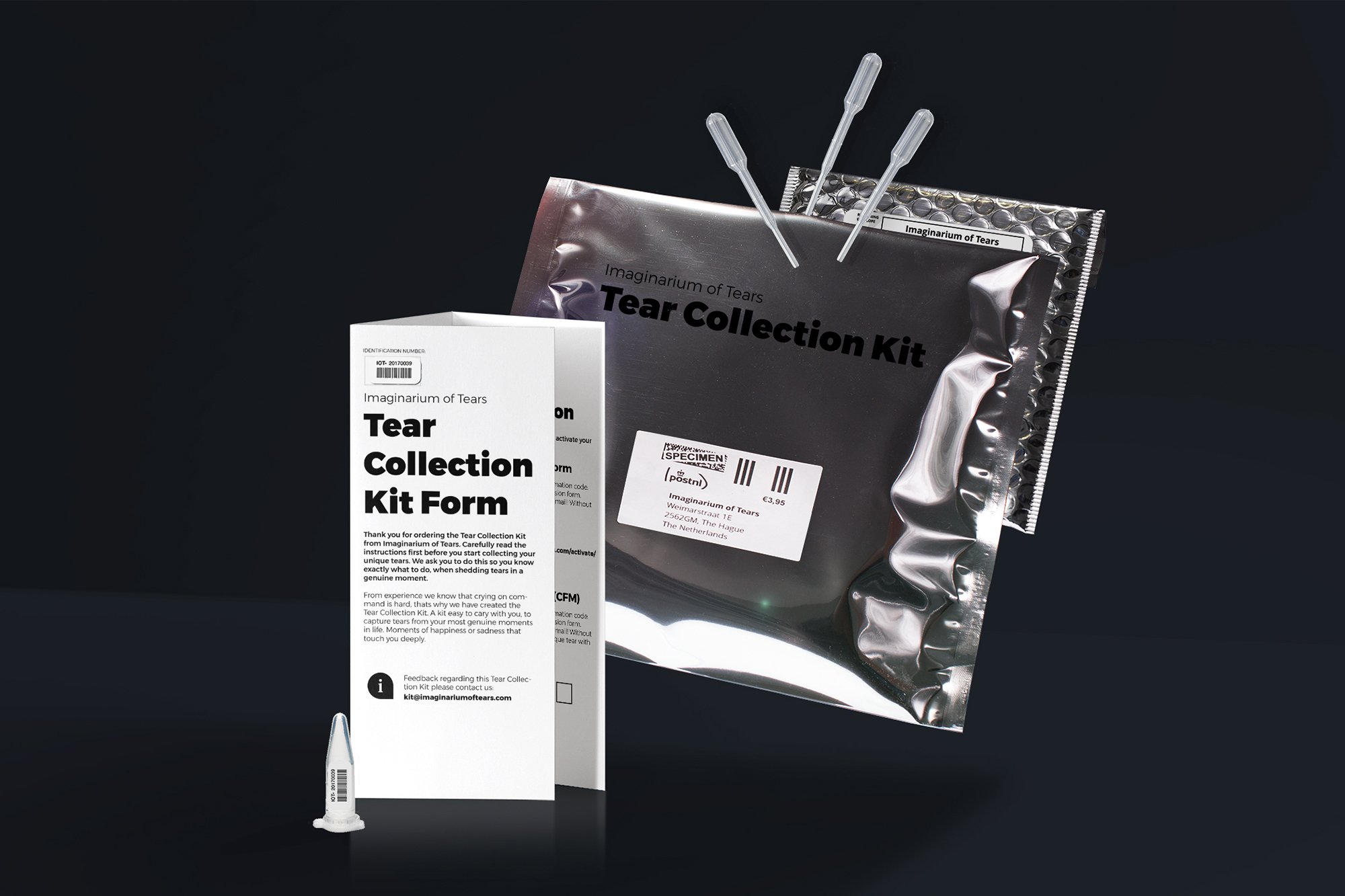
A real tear, preserved with its story.
Collect
Use the Tear Collection Kit when a genuine tear appears during or around a moment you want to remember.
Return
The sample and its context are returned so the tear can stay connected to the person and moment behind it.
Microscopy
The tear is prepared, dried and photographed under the microscope to reveal its crystallized landscape.
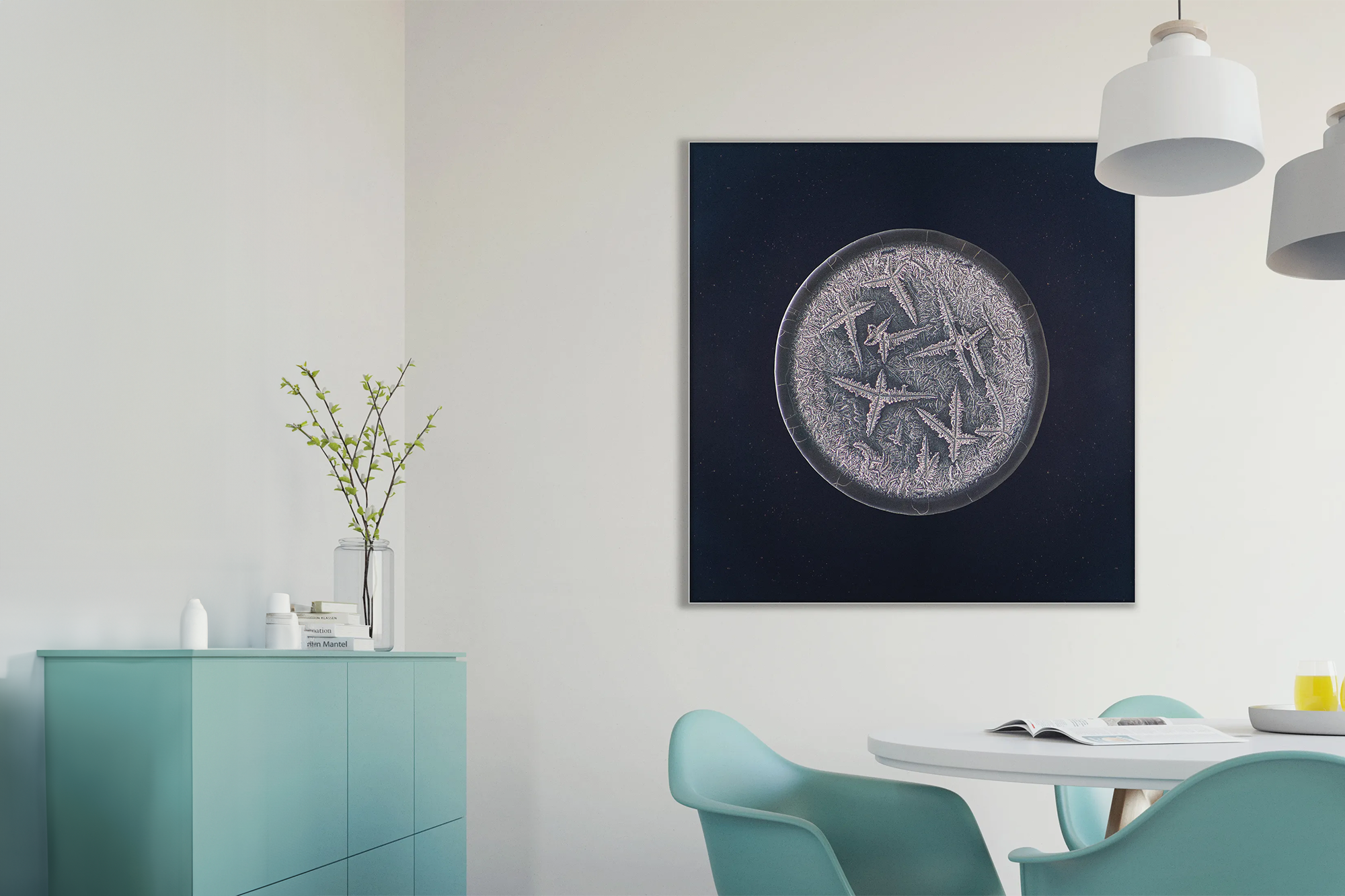
Artwork
The resulting image can become a digital image, photographic print or finished personal artwork.
The crystalline pattern is not an emotion test.
The microscopic structures are shaped by tear composition as well as preparation, humidity, temperature and evaporation. A pattern cannot tell us whether somebody was sad, joyful or overwhelmed.
What makes the artwork personal is the provenance: this specific tear came from this person and was collected around this particular moment. The image and the recorded story remain connected without claiming that emotion can be read from the crystals themselves.
If you are considering this for someone else, gentleness matters.
Can this be given as a sympathy or memorial gift?
It can, but the person and timing matter. Grief is deeply personal, so it is better offered as a possibility rather than an expectation. Nobody should feel that they need to cry, collect a tear or turn their grief into an artwork.
Does the pattern show grief?
No. The microscopic pattern cannot identify an emotion. The connection to grief or remembrance comes from the recorded context and story of the sample.
Does the tear have to be collected at the funeral?
No. A meaningful tear can appear before, during or long after a formal farewell. There is no deadline and no single correct moment; what matters is the personal connection the collector chooses to preserve.
Can the artwork remain private?
Yes. A personal artwork does not need to become part of the public tear archive, and the story behind it can remain private.
There is no deadline for remembering someone.
You can simply explore how the process works, keep the idea for later, or decide it is not for you. If a tear is ever collected, the story, timing and privacy around it remain yours to decide.